AI Search Has Changed How Customers Discover Businesses
For over 20 years, businesses optimized for one thing:
Google rankings.
If your website ranked well, customers clicked.
If customers clicked, traffic increased.
If traffic increased, leads followed.
That model is changing.
Today, millions of people begin their buying journey by asking AI assistants instead of opening Google.
Examples include:
“What’s the best CRM for startups?”
“Recommend an SEO platform for agencies.”
“Which AI visibility tool should I use?”
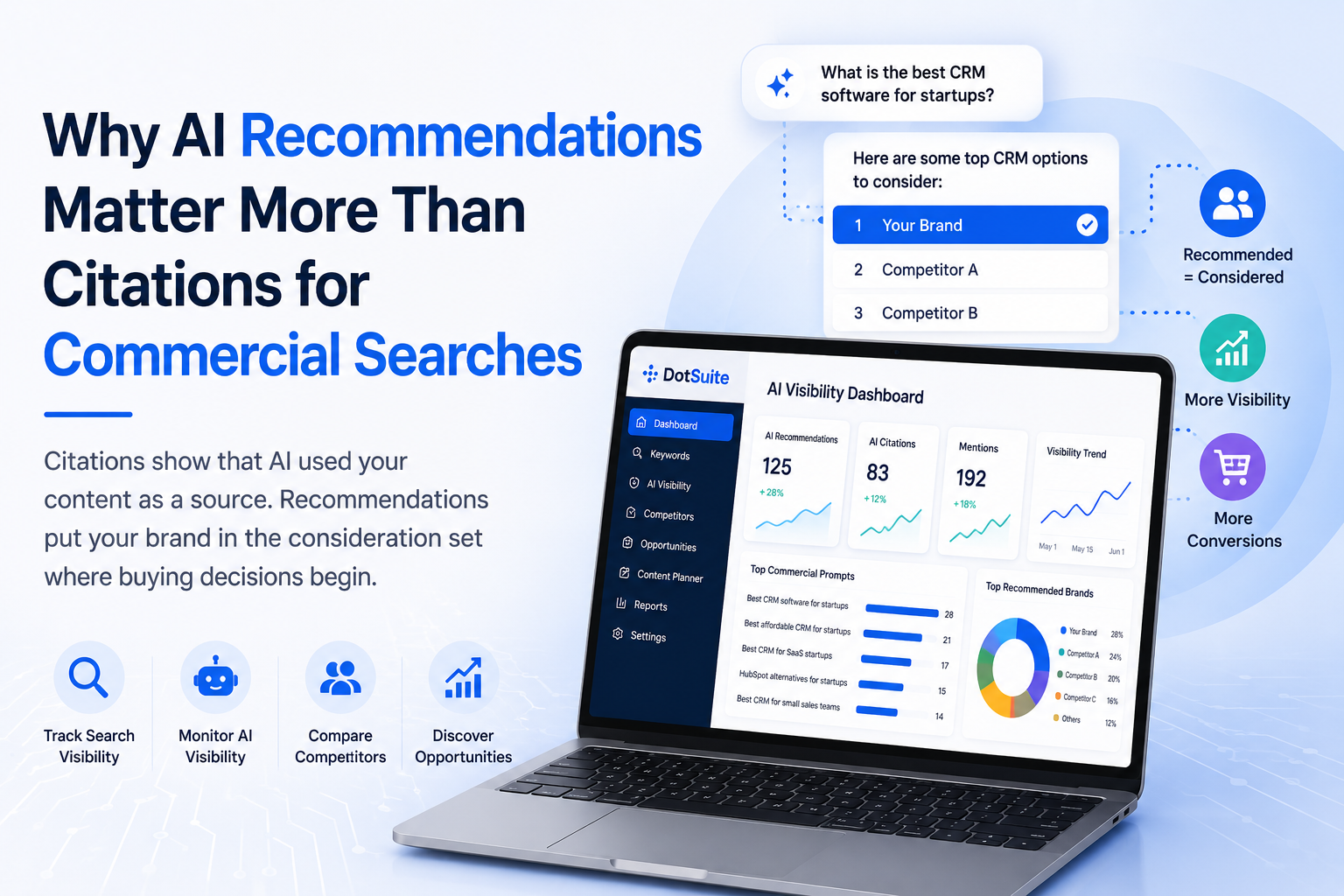
Instead of showing ten blue links, AI systems increasingly provide:
- Direct recommendations
- Product comparisons
- Summaries
- Citations
- Buying advice
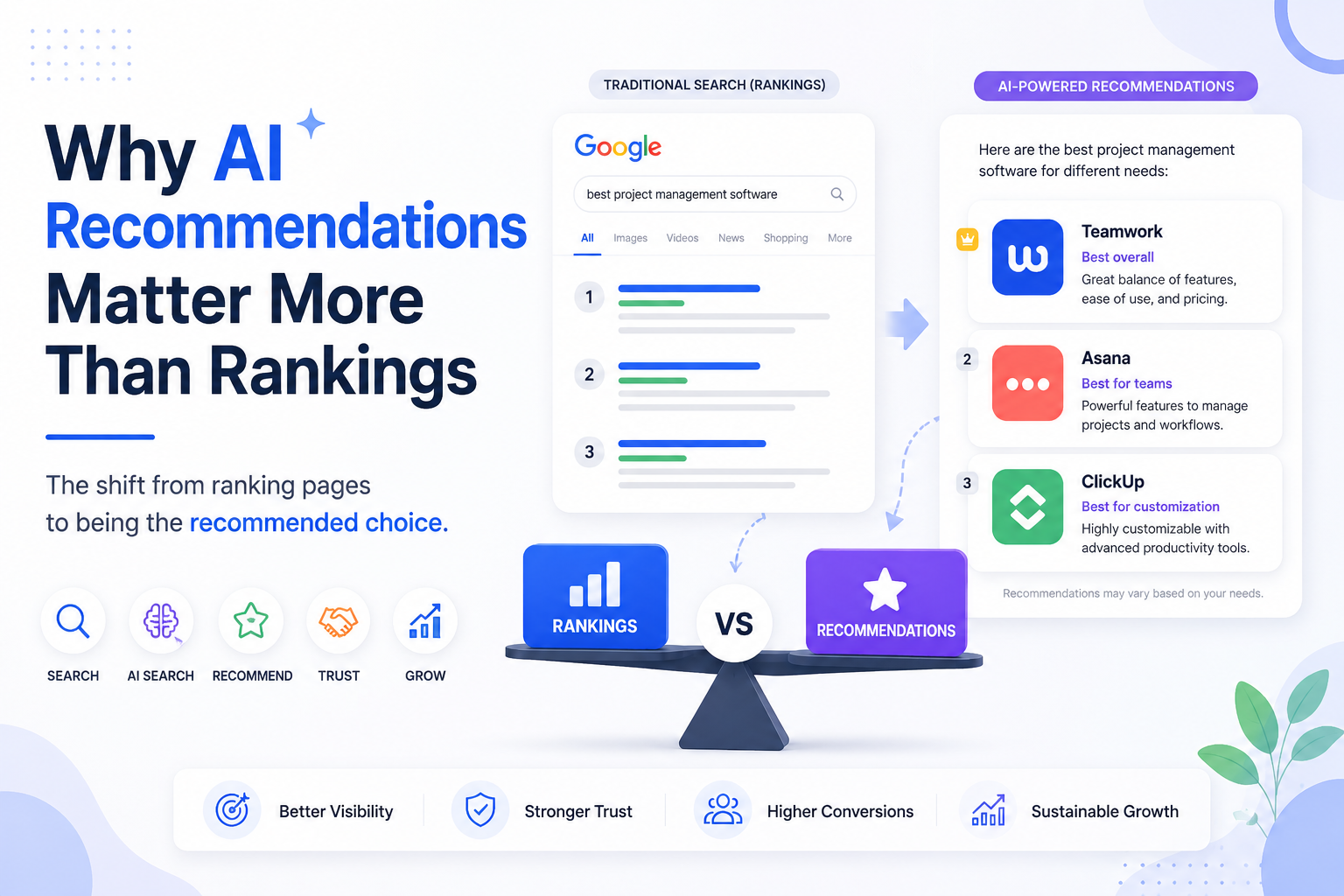
That means businesses need to think beyond rankings.
They need to understand whether AI platforms recommend their brand in the first place.
This has created one of the fastest-growing categories in digital marketing:
AI Visibility Tools.
What Is an AI Visibility Tool?
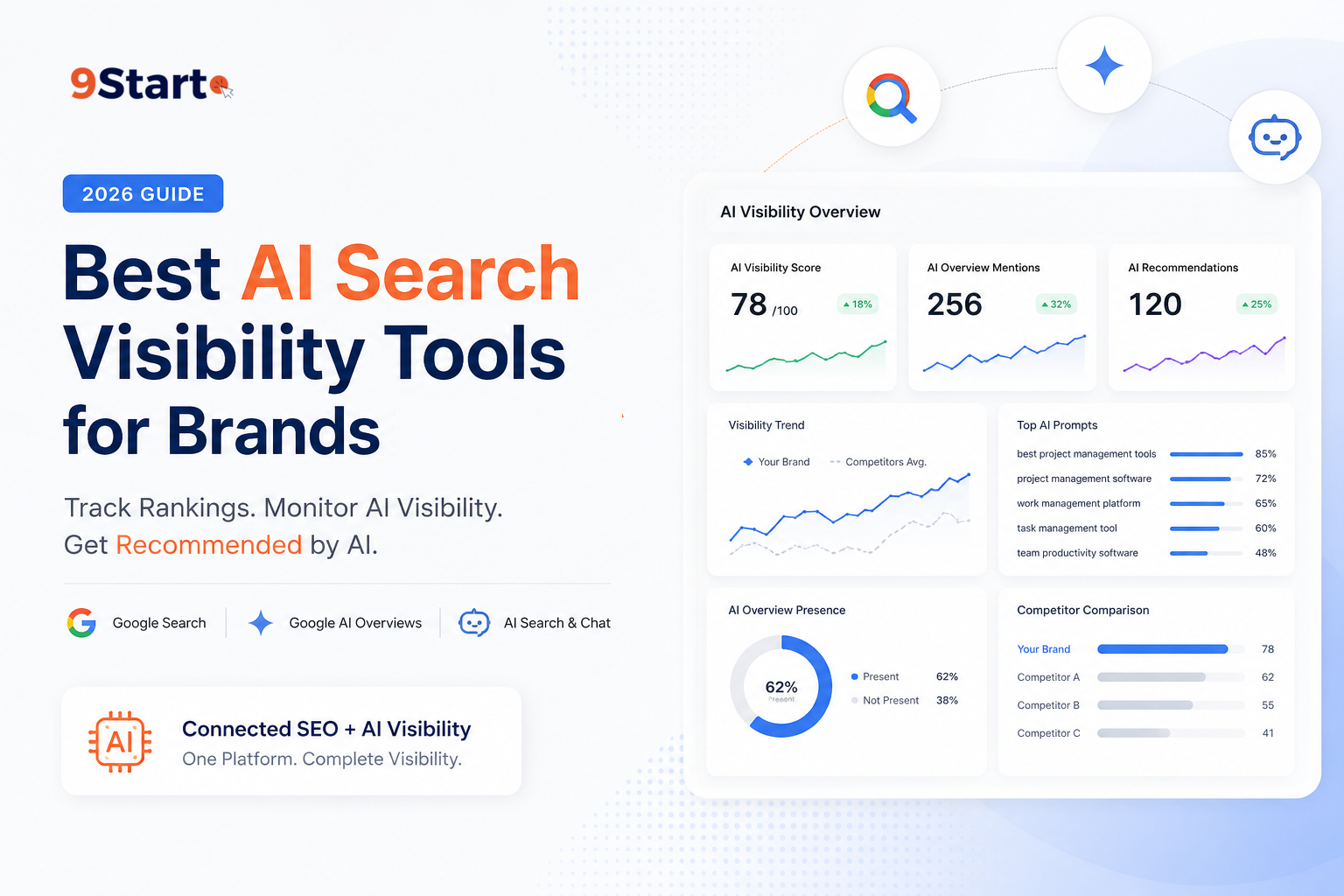
An AI Visibility tool helps businesses understand how visible they are across AI-powered search and answer engines.
Instead of tracking only keyword rankings, these platforms can help measure:
- AI-generated mentions
- Citations
- Recommendations
- Brand visibility
- Competitor visibility
- AI Share of Voice
- Prompt performance
- Search visibility (on some platforms)
Some tools focus purely on AI monitoring.
Others combine traditional SEO with AI visibility, giving businesses a unified view of modern search.
How We Evaluated These Tools
Rather than comparing long feature lists, we focused on what matters most to businesses.
Evaluation Criteria
|
Criteria |
Why It Matters |
|---|---|
|
AI Visibility Tracking |
Can it monitor visibility in AI-generated answers? |
|
Google AI Overviews |
Does it help track AI-powered Google search experiences? |
|
Search Intelligence |
Does it include traditional search insights? |
|
Competitor Intelligence |
Can you compare your visibility against competitors? |
|
Multi-Platform Support |
Does it support multiple AI platforms? |
|
Ease of Use |
Suitable for startups and growing teams? |
|
Reporting |
Actionable insights rather than raw data |
|
Pricing & Value |
Is it affordable for SMBs and startups? |
No single platform is perfect for everyone.
The best choice depends on your goals, team size, and budget.
Quick Comparison
|
Tool |
Best For |
AI Visibility |
Search Tracking |
AI Platforms |
|---|---|---|---|---|
|
DotSuite |
Startups & Growing Businesses |
✅ |
✅ |
Google AI Overviews (base), additional AI platforms via AI Visibility Tracker add-on |
|
Profound |
Enterprise AI Monitoring |
✅ |
Limited |
Multiple |
|
Peec AI |
AI Brand Monitoring |
✅ |
No |
Multiple |
|
Semrush |
Traditional SEO Teams |
Limited |
✅ |
Some AI capabilities |
|
Ahrefs |
SEO Professionals |
Limited |
✅ |
Limited |
|
Similarweb |
Market Intelligence |
Limited |
✅ |
Limited |
|
Otterly AI |
AI Mention Monitoring |
✅ |
No |
Multiple |
1. DotSuite — Best Overall for Startups & Growing Businesses ⭐ Editor’s Choice
Best For
Businesses looking for one platform that combines traditional SEO with AI Visibility.
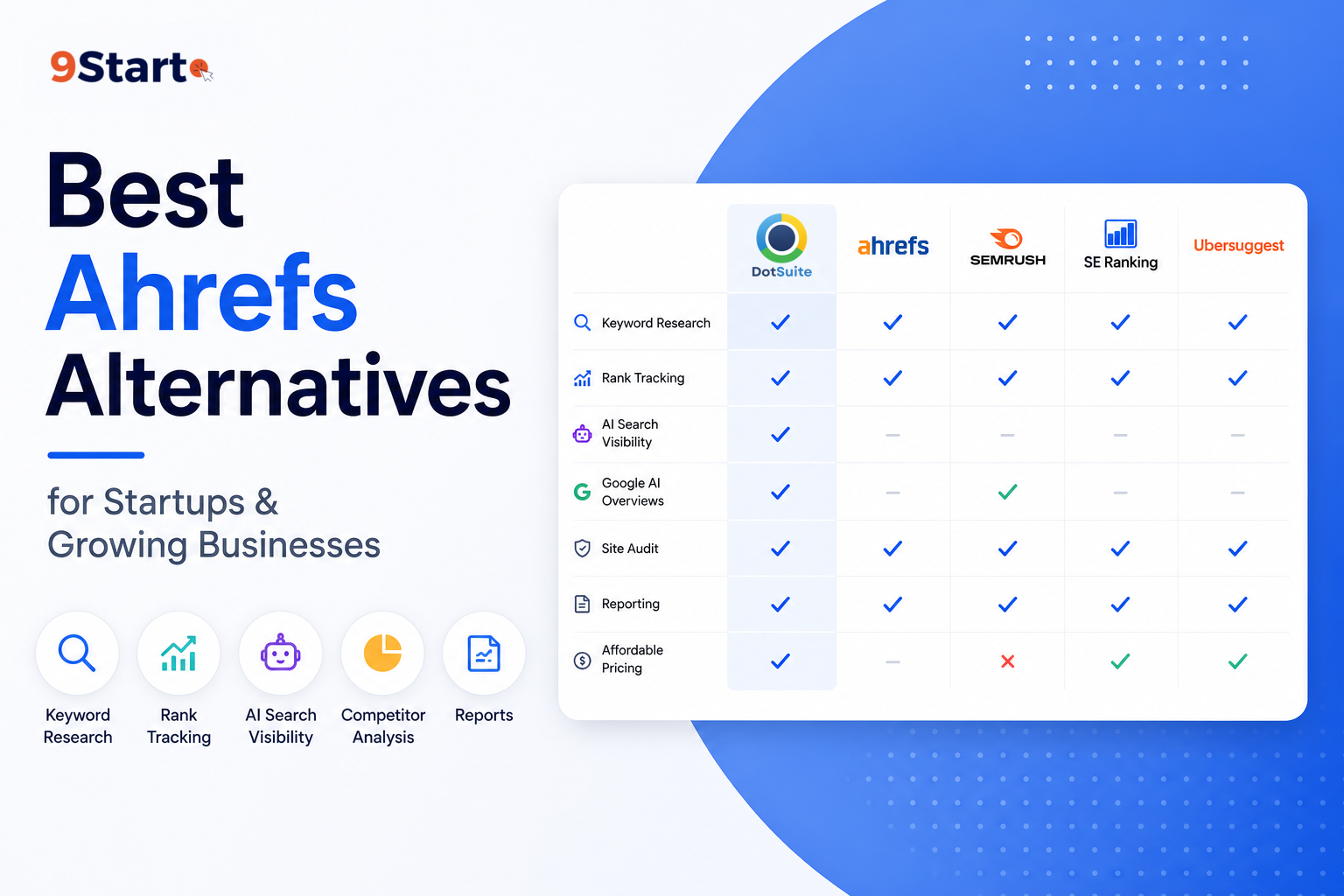
Unlike many AI visibility tools that focus exclusively on AI prompts or brand mentions, DotSuite approaches visibility from a broader perspective.
The platform combines Search Intelligence and AI Visibility into a single workflow, making it easier to understand how customers discover your business across both traditional search and AI-powered experiences.
One of DotSuite’s biggest differentiators is its pricing model.
The base plan includes unified Google Search and Google AI Overviews tracking, allowing businesses to monitor traditional rankings alongside Google’s AI-generated search experiences from one dashboard.
For businesses that need broader coverage, the optional AI Visibility Tracker add-on extends monitoring across additional AI platforms, helping teams understand their presence beyond Google.
Key Features
- Search Intelligence
- Google Search tracking
- Google AI Overviews tracking
- AI Visibility Tracker (add-on)
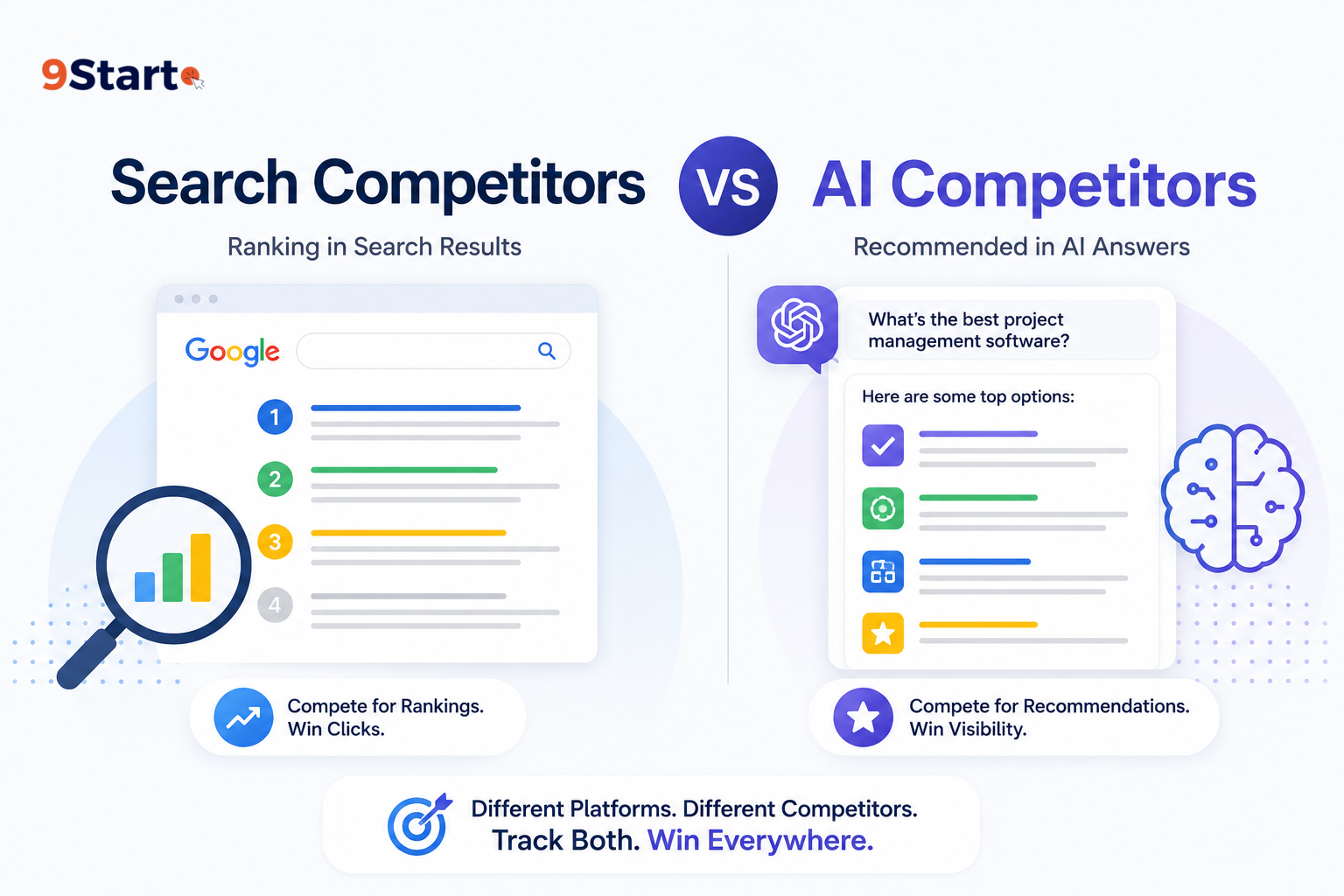
- Competitor Finder
- Search Competitors
- AI Competitors
- AI Mentions
- Citation Tracking
- Prompt Intelligence
- AI Growth Copilot
- Unified dashboard
What We Like
✔ Google Search + Google AI Overviews in one platform
✔ Optional AI Visibility Tracker for broader AI platform monitoring
✔ Strong competitor intelligence
✔ Designed for startups and growing businesses
✔ Actionable recommendations instead of just reports
✔ Startup-friendly pricing
Consider Before Buying
Businesses that only need backlink analysis or enterprise-scale SEO auditing may still rely on dedicated SEO platforms alongside DotSuite.
Our Verdict
If your goal is understanding how customers discover your brand across search and AI, DotSuite offers one of the most balanced approaches available, especially for startups, agencies, and growing businesses that want modern search intelligence without enterprise complexity.
2. Profound
Best For
Large enterprises focused on monitoring AI-generated brand visibility across multiple AI platforms.
Profound is designed around AI visibility and enterprise reporting rather than traditional SEO.
It focuses heavily on helping larger organizations understand where and how AI systems reference their brands.
Pros
- Enterprise reporting
- AI monitoring
- Multi-platform support
Cons
- Primarily focused on AI visibility
- May be more than smaller businesses require
3. Peec AI
Best For
Companies looking for dedicated AI brand monitoring.
Peec AI focuses on tracking how brands appear in AI-generated answers, helping teams understand mentions, recommendations, and visibility trends.
It is particularly useful for organizations that want to monitor AI conversations without needing a complete SEO suite.
Pros
- Focused AI monitoring
- Clean interface
- AI-first workflow
Cons
- Limited traditional SEO capabilities
- May require additional SEO tools for a complete organic strategy
4. Semrush
Best For
Marketing teams, agencies, and businesses looking for a comprehensive SEO and digital marketing platform.
Semrush has been one of the most trusted SEO platforms for years. It offers keyword research, backlink analysis, site audits, PPC insights, content marketing tools, and competitor research in one ecosystem.
As AI search evolves, Semrush has also introduced AI-related capabilities, but its core strength remains traditional SEO and search marketing rather than dedicated AI visibility.
Key Features
- Keyword Research
- Position Tracking
- Site Audit
- Backlink Analytics
- Competitor Research
- Content Marketing Toolkit
- Local SEO
- PPC Research
Pros
✔ Mature SEO platform
✔ Extensive keyword database
✔ Excellent backlink analysis
✔ Strong reporting
✔ Large ecosystem
Cons
✖ AI visibility isn’t its primary focus
✖ Enterprise pricing may be expensive for startups
Our Verdict
If traditional SEO remains your primary growth channel, Semrush continues to be one of the strongest platforms available.
However, businesses wanting unified AI visibility across multiple AI platforms may need complementary tools.
5. Ahrefs
Best For
SEO professionals, content marketers, and technical SEO teams.
Ahrefs has built its reputation around one of the industry’s strongest backlink databases.
Today it also provides:
- Keyword research
- Site Explorer
- Content Explorer
- Rank tracking
- Technical audits
Its AI-related capabilities are evolving, but Ahrefs remains primarily an SEO research platform.
Pros
✔ Excellent backlink intelligence
✔ Content gap analysis
✔ Strong technical SEO
✔ Reliable keyword data
Cons
✖ Limited dedicated AI visibility monitoring
✖ Doesn’t focus on AI recommendations
✖ Better suited for larger marketing budgets.
Our Verdict
Perfect for technical SEO.
Less suitable as a complete AI Visibility platform.
6. Similarweb
Best For
Market intelligence and competitive benchmarking.
Unlike traditional SEO platforms, Similarweb focuses on broader digital market insights.
Businesses use it to understand:
- Website traffic
- Market share
- Audience behavior
- Competitor trends
While useful for market intelligence, it isn’t designed specifically for AI visibility tracking.
Pros
✔ Excellent market intelligence
✔ Traffic benchmarking
✔ Competitive insights
Cons
✖ Limited AI-specific monitoring
✖ Not an SEO replacement
7. Otterly AI
Best For
Businesses wanting lightweight AI mention monitoring.
Otterly AI focuses on tracking brand visibility across AI platforms.
It helps users monitor:
- Brand mentions
- Prompt responses
- AI visibility trends
Its simplicity makes it attractive for businesses just beginning to monitor AI-generated answers.
Pros
✔ Easy to use
✔ AI-first approach
✔ Simple reporting
Cons
✖ Limited traditional SEO capabilities
✖ Not designed as a complete Search Intelligence platform
Which AI Visibility Tool Is Right for You?
Choosing an AI visibility platform depends on what you’re trying to achieve.
Choose DotSuite if you want:
✅ Unified Google Search + Google AI Overviews tracking
✅ AI Visibility in one workflow
✅ Search Intelligence
✅ Competitor Intelligence
✅ AI Competitors
✅ Search Competitors
✅ Startup-friendly pricing
Choose Semrush if you want:
- Enterprise SEO
- PPC
- Backlinks
- Keyword research
Choose Ahrefs if you want:
- Backlink analysis
- Technical SEO
- Content research
Choose Profound if you need:
- Enterprise AI monitoring
- Large-scale AI reporting
Choose Peec AI if you need:
- Dedicated AI visibility monitoring
What Makes a Great AI Visibility Tool?
This is where many buyers make mistakes.
Don’t buy software because it tracks prompts.
Buy software because it helps improve visibility.
Look for these capabilities.
1. Search + AI Together
Your customers don’t only use ChatGPT.
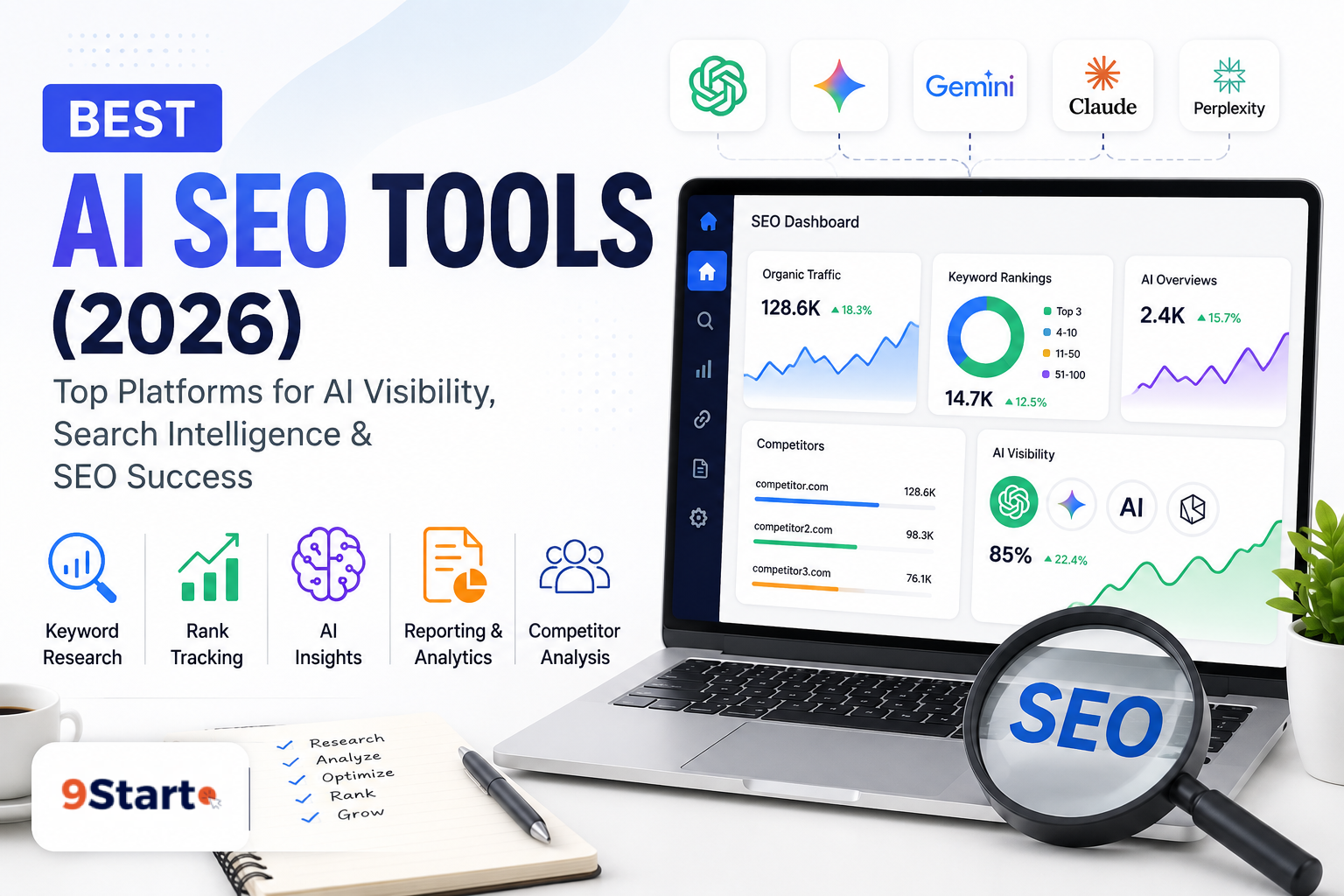
They also use:
- Google Search
- Google AI Overviews
- Gemini
- Claude
- Perplexity
A good platform should help you understand discovery across multiple channels.
2. Competitor Intelligence
Understanding your competitors is just as important as tracking your own brand.
Ask questions like:
Why is AI recommending them?
Which topics do they dominate?
Where are they cited?
3. Actionable Recommendations
Reports don’t improve visibility.
Actions do.
The best platforms tell you:
- What to improve
- Which content to create
- Where competitors are outperforming you
- Which opportunities you’re missing
4. AI Visibility, Not Just Prompt Tracking
Prompt tracking is useful.
But businesses need more.
Look for platforms that measure:
- Recommendation frequency
- Citation rate
- AI mentions
- AI Share of Voice
- Topic coverage
- Competitor visibility
Why AI Visibility Matters More Than Ever
The customer journey has fundamentally changed.
Five years ago:
Google

↓

Website

↓

Customer
Today:
Google AI Overview

↓

ChatGPT

↓

Gemini

↓

Claude

↓

Perplexity

↓

Website

↓

Customer
Businesses no longer control the first interaction.
AI increasingly does.
That means your brand needs to be visible wherever customers ask questions.
Our Experience After Working with Hundreds of Businesses
Over the last decade, we’ve helped startups, SaaS companies, ecommerce brands, and enterprises improve their online visibility.
One thing has remained consistent.
Businesses that adapt early usually outperform everyone else.
Years ago, that meant investing in SEO before competitors did.
Today, it means understanding AI-powered discovery before it becomes standard practice.
We’re already seeing customers ask questions directly to AI instead of browsing dozens of websites.
That shift makes AI visibility a strategic business metric—not just another marketing metric.
Why We Chose DotSuite as Our Editor’s Choice
DotSuite isn’t trying to replace traditional SEO.
Instead, it bridges the gap between traditional search and AI-powered discovery.
What impressed us most is its unified approach.
Instead of forcing businesses to buy separate products for SEO and AI visibility, DotSuite combines:
- Search Intelligence
- Google Search tracking
- Google AI Overviews tracking
- AI Visibility Tracker (optional add-on)
- Competitor Finder
- AI Competitors
- Search Competitors
- Prompt Intelligence
- AI Growth Copilot
For startups and growing businesses, this creates a simpler and more cost-effective workflow.
As AI search continues to evolve, we expect platforms that combine traditional SEO with AI Visibility to become increasingly valuable.
Final Verdict
AI Visibility is no longer a niche concept.
It’s becoming part of every modern SEO strategy.
The right platform depends on your goals.
🏆 Best Overall for Startups & Growing Businesses
DotSuite
Best balance of Search Intelligence, Google AI Overviews tracking, AI Visibility, competitor insights, and affordability.
🏆 Best Traditional SEO Platform
Semrush
Excellent for comprehensive SEO, keyword research, and digital marketing.
🏆 Best Technical SEO Platform
Ahrefs
Outstanding backlink analysis and technical SEO capabilities.
🏆 Best Enterprise AI Visibility Platform
Profound
Built for large organizations requiring extensive AI visibility monitoring.
🏆 Best AI Brand Monitoring Platform
Peec AI
Strong focus on AI mentions and AI-generated visibility.
Final Thoughts
The way customers discover businesses is changing rapidly.
SEO remains essential, but rankings alone no longer tell the whole story.
The next generation of successful businesses will understand not only where they rank in Google, but also how AI platforms perceive, recommend, and compare their brand.
Whether you’re a startup, agency, or enterprise, investing in AI visibility today will help you stay competitive as search continues to evolve.
Frequently Asked Questions
Everything you need to know about AI Visibility, AI Search, and choosing the right AI Visibility tool.
An AI Visibility tool helps businesses monitor how often their brand appears in AI-generated answers, recommendations, citations, and summaries across platforms like ChatGPT, Google AI Overviews, Gemini, Claude, and Perplexity.
SEO focuses on improving your rankings in traditional search engines like Google.
AI Visibility focuses on increasing your presence inside AI-generated answers, recommendations, citations, and summaries across modern AI platforms.
The most successful businesses optimize for both traditional search visibility and AI visibility.
No.
Prompt tracking tells you whether your brand appears for specific prompts, but it doesn't provide the full picture.
A complete AI Visibility strategy should also include:
- Competitor Intelligence
- Search Visibility
- Citation Tracking
- Recommendation Analysis
- AI Share of Voice
Startups should look for a platform that combines traditional SEO with AI Visibility instead of requiring multiple subscriptions.
Platforms like DotSuite provide unified Google Search and Google AI Overviews tracking in the base plan, while the optional AI Visibility Tracker extends monitoring across additional AI platforms.
Yes.
Google AI Overviews can reduce clicks for some informational searches while increasing the importance of:
- Authority
- Structured Data
- Topical Depth
- Entity Recognition
- Brand Trust
Businesses should monitor both traditional rankings and AI-powered search experiences.
Yes, although it differs from traditional rank tracking.
Businesses can measure:
- AI Mentions
- Citations
- Recommendations
- Competitor Visibility
- Search Visibility
- AI Share of Voice
- Prompt Coverage
Together, these metrics provide a much clearer picture of how discoverable your business is across both search engines and AI-powered platforms.