
Over the last year, one topic has dominated conversations around AI search.
Prompt tracking.
Businesses are spending thousands of dollars every month trying to answer one question:
“Does ChatGPT recommend my business?”
New AI visibility tools appear almost every week.
Most promise the same thing.
Track prompts.
Monitor mentions.
Measure AI visibility.
But after spending years helping businesses improve their visibility through SEO and digital marketing, something didn’t quite add up.
We kept asking ourselves a different question.
Where do AI recommendations actually come from?
Does ChatGPT randomly decide which brands to recommend?
Does Google AI Overviews simply summarize the highest-ranking pages?
Does Gemini use an entirely different system?
Or is there something much deeper happening?
To answer those questions, we decided to run a simple experiment.
Instead of analyzing prompts, we analyzed the relationship between traditional Google rankings and AI recommendations.
What we discovered completely changed the way we think about AI SEO.
The AI SEO Industry Might Be Looking at the Wrong Metric
Today, almost every AI visibility platform starts at the same point.
Prompt

↓

Did AI mention my brand?
But that’s measuring the result.
Not the cause.
Imagine asking:
Why is HubSpot recommended?
A prompt tracker answers:
Because it appeared.
That’s like asking why someone won an Olympic gold medal and answering:
Because they finished first.
Technically true.
Practically useless.
The real question is:
Why did AI choose HubSpot over hundreds of other CRM companies?
That’s where things become interesting.
Our Hypothesis
Before running the experiment, we had a theory.
We believed AI recommendations were not created in isolation.
Instead, they were likely influenced by years of SEO, content marketing, topical authority, and brand recognition.
In other words…
AI wasn’t replacing SEO.
AI was building on top of it.
The Experiment
We chose one commercial keyword.
Best CRM Software for Startups
Why?
Because it meets several important criteria.
- High commercial intent
- Extremely competitive
- Multiple well-known brands
- Rich AI answers
- Strong organic competition
Then we compared four different systems.
- Google Organic Search
- Google AI Overviews
- ChatGPT
- Gemini
Instead of looking at rankings, we looked at something different.
Which brands consistently appeared?
Screenshot 1 — Google Organic Search
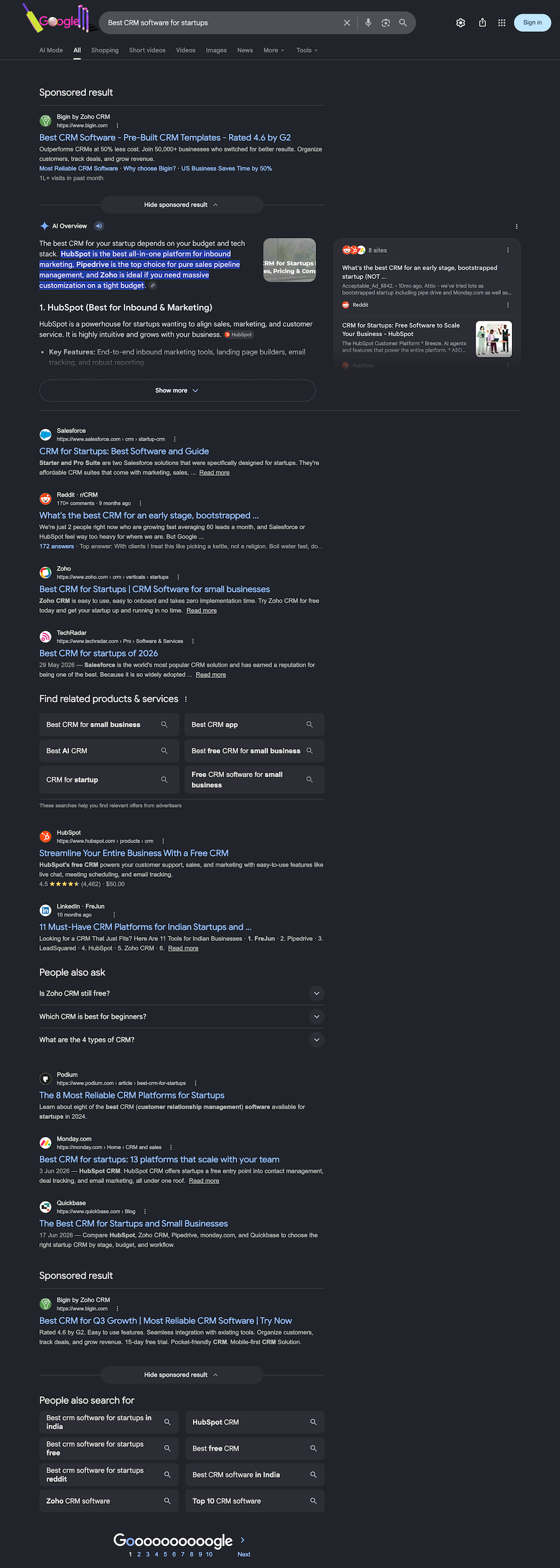
The first page includes names like:
- HubSpot
- Salesforce
- Zoho
- Monday.com
- TechRadar
- Podium
These aren’t random websites.
They’re either:
- Strong brands
- High-authority publishers
- Platforms with extensive content around CRM software
Observation
Google has already determined these websites are among the most authoritative resources for this topic.
That’s important.
Screenshot 2 — Google AI Overviews
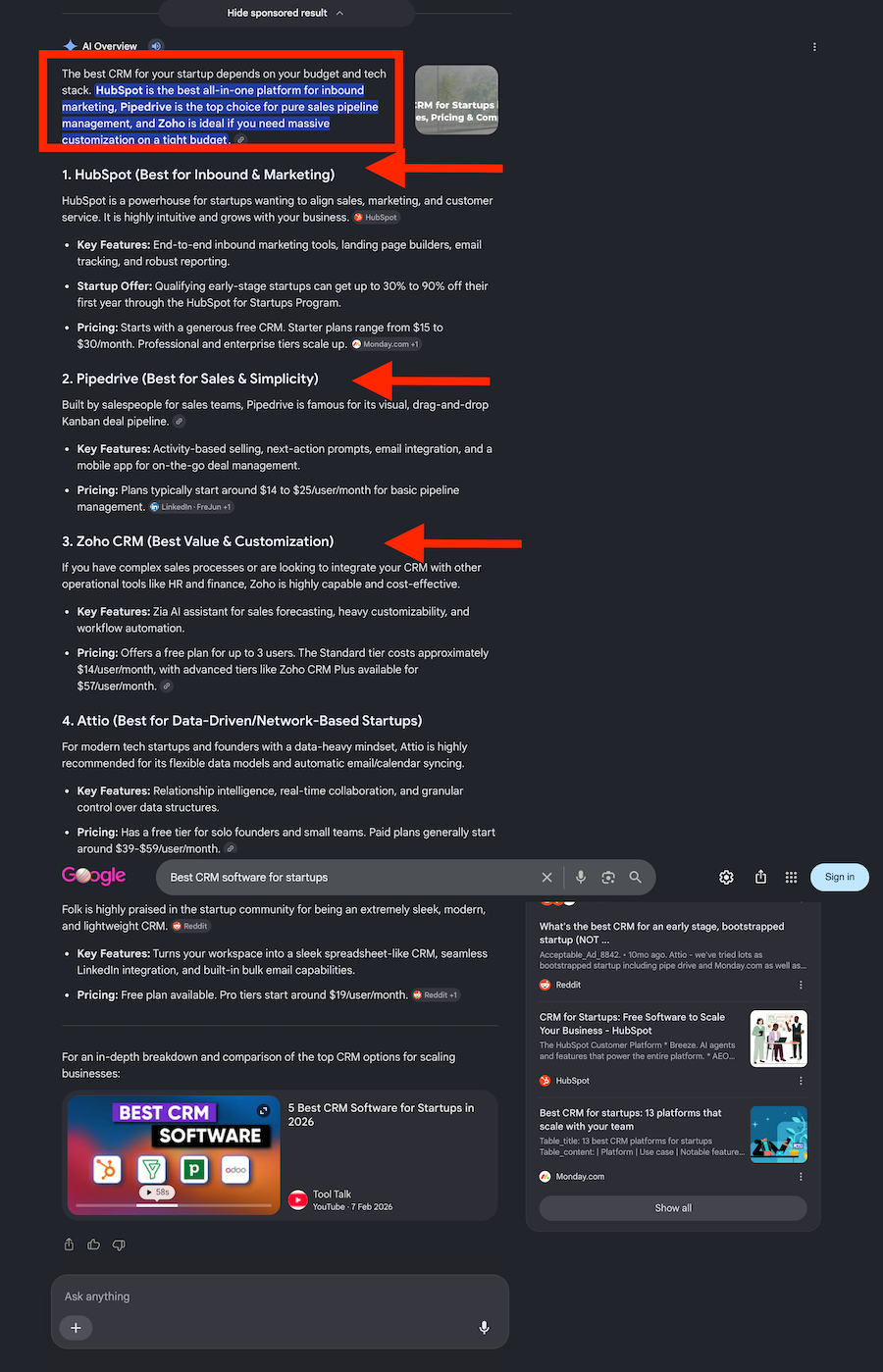
Now something interesting happens.
Google AI Overviews recommends:
- HubSpot
- Pipedrive
- Zoho
- Attio
Notice something.
It doesn’t simply copy the first page.
But it also doesn’t ignore it.
Instead…
It selects brands it believes best answer the user’s intent.
Screenshot 3 — ChatGPT
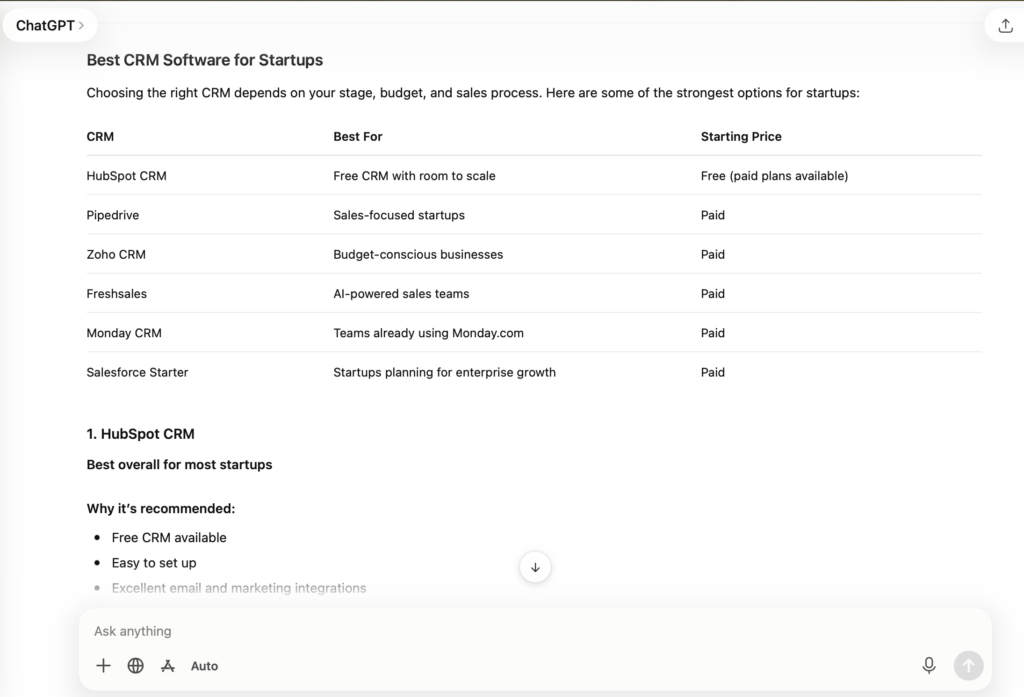
ChatGPT recommends:
- HubSpot
- Pipedrive
- Zoho
- Freshsales
- Monday
- Salesforce
Different AI.
Different infrastructure.
Very similar recommendations.
Screenshot 4 — Gemini
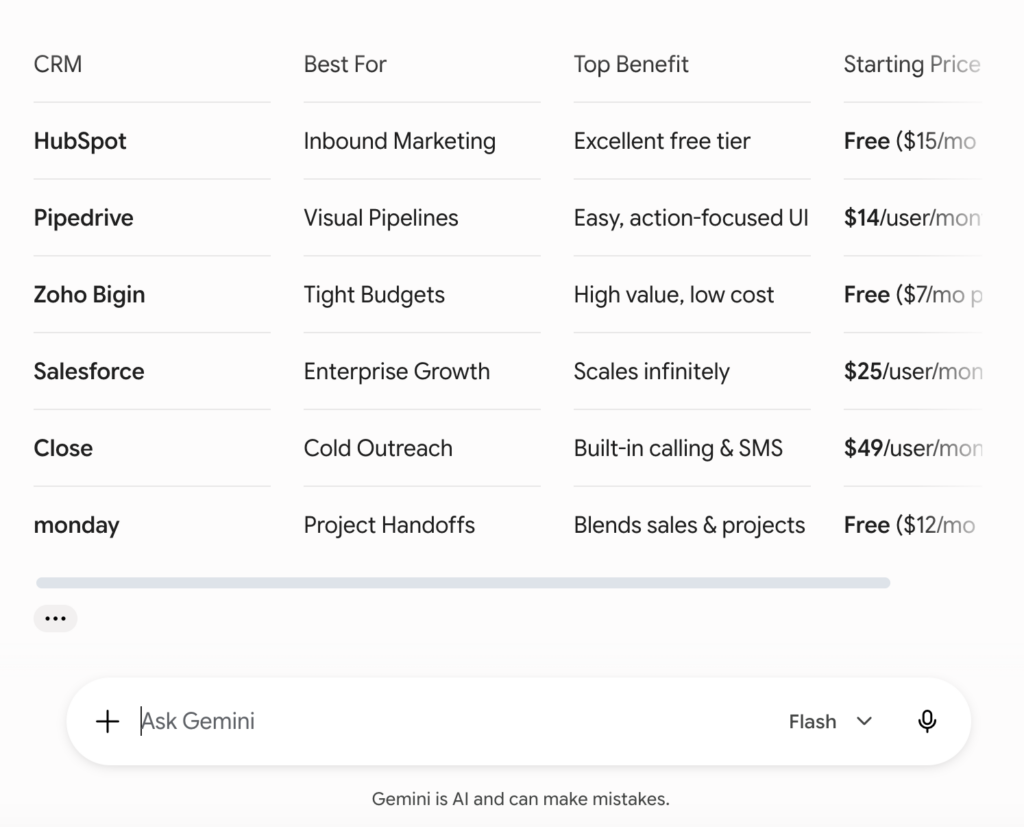
Gemini recommends:
- HubSpot
- Zoho
- Salesforce
- Monday
- Pipedrive
Again…
Huge overlap.
The Pattern
This was the moment everything became clear.
Although every AI platform generated different wording…
Different formatting…
Different reasoning…
The recommended brands were remarkably consistent.
Not identical.
But surprisingly close.
So What’s Really Happening?
This is where I think the SEO industry is missing the bigger picture.
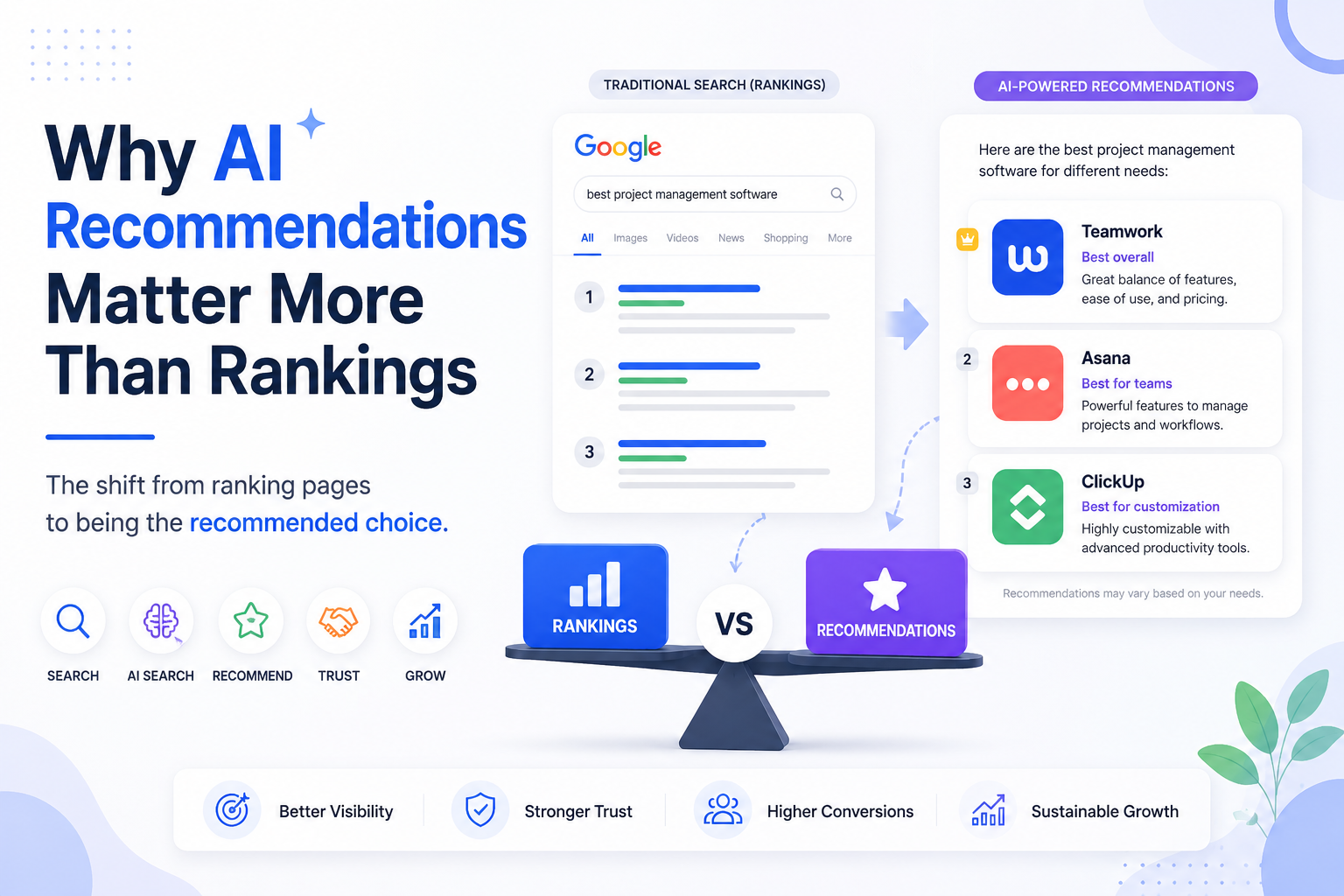
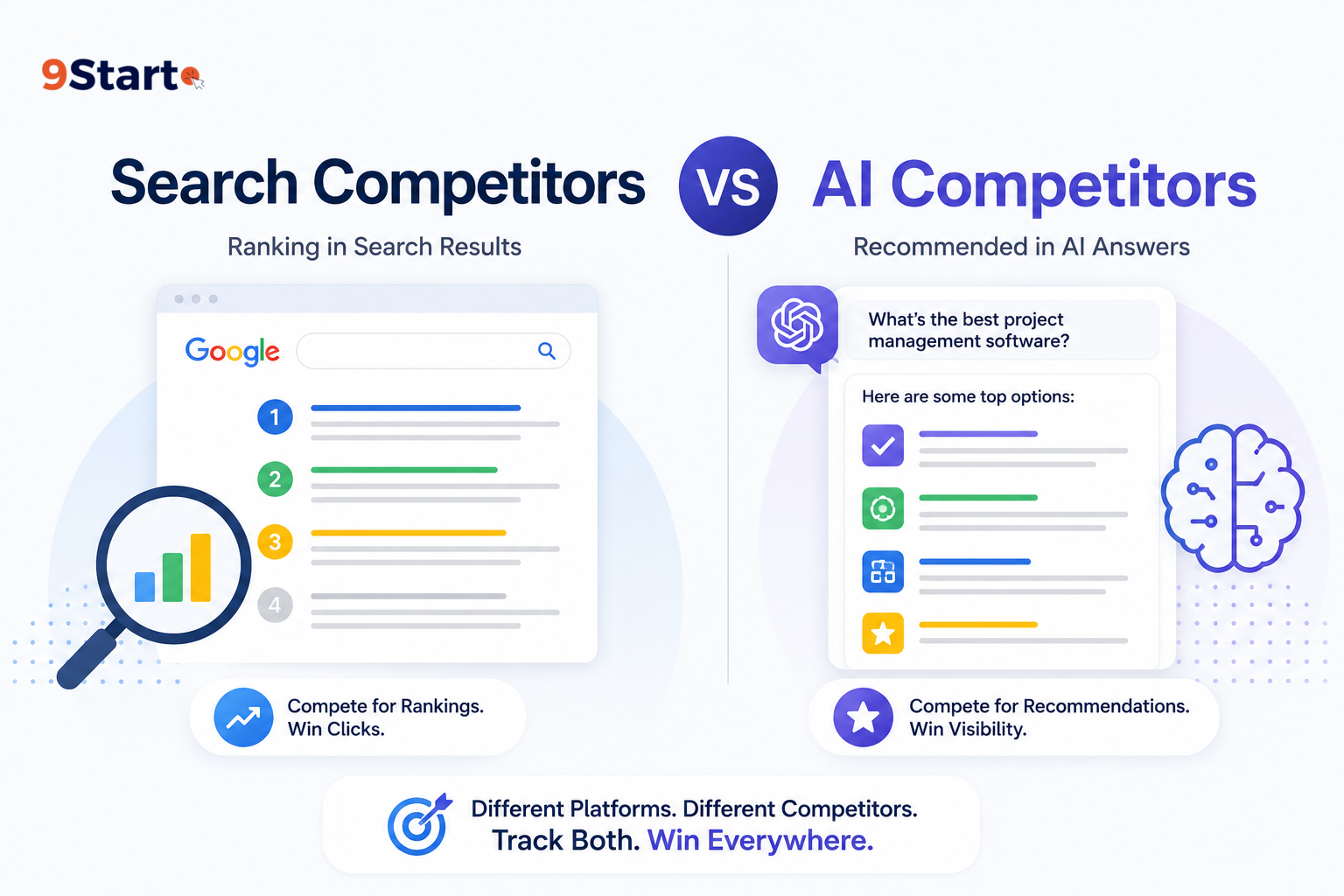
AI isn’t asking:
Which website ranks #1?
It’s asking something much more sophisticated.
Which brands are most likely to satisfy this user’s intent?
That’s a huge difference.
But…
Where does AI learn that confidence?
Organic Search Is Still One of the Strongest Trust Signals
Think about HubSpot.
Did AI suddenly discover HubSpot because someone typed a prompt?
Of course not.
HubSpot spent more than a decade building authority.
They’ve published:
- CRM guides
- Startup resources
- Sales articles
- Marketing courses
- Free templates
- Comparison pages
- Documentation
- Case studies
- Research reports
Thousands of pages.
Millions of backlinks.
Hundreds of mentions across trusted publications.
Years of topical authority.
When AI recommends HubSpot…
It’s not making a random decision.
It’s recognizing years of accumulated trust.
Keywords Create Authority
This is where our biggest insight came from.
Most marketers think this journey looks like this.
Prompt

↓

AI Answer

↓

Recommendation
We think it actually looks like this.
Keyword

↓

Content

↓

Topical Authority

↓

Organic Rankings

↓

Entity Recognition

↓

AI Understanding

↓

Recommendation
The recommendation is the final output.
Not the starting point.
Keywords Haven’t Disappeared
One of the biggest myths in SEO today is:
Keywords don’t matter anymore.
That’s not what we’re seeing.
Keywords still determine:
- What content gets created.
- Which topics you own.
- How search engines understand your expertise.
- Which entities you’re associated with.
- Whether AI considers you relevant.
The difference is this.
Keywords are no longer just about rankings.
They’re about building knowledge.
Why Prompt Tracking Alone Isn’t Enough
Imagine two businesses.
Business A tracks 5,000 prompts every day.
Business B understands:
- Keyword clusters
- Search intent
- Topical authority
- Entity relationships
- Organic visibility
- AI recommendations
Which one is more likely to improve AI visibility?
Business B.
Because they’re improving the cause.
Not just measuring the outcome.
The Missing Layer: Recommendation Probability
This is where we think the industry is heading.
Instead of asking:
Did AI mention me?
Businesses should ask:
How likely is AI to recommend me for this topic?
That requires understanding much more than prompts.
It requires understanding:
- Organic rankings
- Content depth
- Topic ownership
- Competitor authority
- Entity confidence
- Search intent
- AI citations
A New Framework for AI SEO
At 9Start, we believe the future of AI optimization looks like this:
Keyword Strategy
        ↓
Topic Clusters
        ↓
High-Quality Content
        ↓
Topical Authority
        ↓
Organic Visibility
        ↓
Entity Recognition
        ↓
AI Confidence
        ↓
AI Recommendation
        ↓
Customer Discovery
Notice something.
The prompt isn’t even part of the optimization process.
It’s simply where the recommendation becomes visible.
What This Means for Businesses
If your strategy today is:
- Track prompts
- Count mentions
- Celebrate visibility
You’re only looking at the last 5% of the journey.
The other 95% happens long before someone opens ChatGPT.
What We Think the Next Generation of AI SEO Looks Like
Businesses shouldn’t choose between:
SEO
or
AI Search.
They need both.
The companies that dominate AI recommendations over the next decade will likely be those that:
- Build comprehensive topical authority.
- Publish genuinely helpful content.
- Become recognized entities in their industry.
- Earn trust across the web.
- Understand both search and AI visibility.
Final Thoughts
AI search isn’t replacing SEO.
It’s rewarding the businesses that have built the strongest foundation.
Prompts don’t create visibility.
They expose it.
The real work happens months—or even years—earlier through keyword strategy, topical authority, and trust.
As AI continues to reshape how people discover products and services, one thing is becoming increasingly clear:
The future of AI visibility doesn’t begin with prompts.
It begins with becoming the best answer for the topics your customers care about.
 Free AI Visibility Check
What's Your AI Visibility Score?
See how your website performs across Google Search, Google AI Overviews and AI-powered search. Get an instant overview of your AI Search potential.
✓ Free assessment • ✓ No credit card • ✓ Takes less than 30 secondsYou'll Discover
- 📈 Google Rankings
- 🤖 Google AI Overviews Visibility
- ✨ AI Visibility Score
- 🏆 Competitor Comparison
- 📊 Topical Authority
- ⚡ AI Recommendation Potential